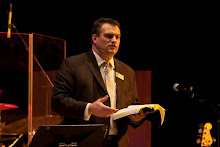
There are many things I cherish about my first pastorate. Pastoring is the Lord's work, but it is the people business. If you cannot deal with people, accept people, love people, admonish people and lead people, do not think you will have an easy pastorate because that is what pastors do; deal with people.
Some pastors would have you believe that pastoring is 95% horrible and 5% rewarding. This is so misrepresented, especially in those smirking comments that some pastors make too often. Men who shouldn't be deacons can kill a pastor and crush a thriving ministry if the pastor runs from them or fails to lead them. True enough, some pastors never truly get a chance to lead because a church is deacon possessed rather than Christ centered and biblically led, by the pastor.
To encourage you,I want to share with you one of the most wonderful mornings I ever spent as a pastor. To set this up, it will sound discouraging to say that I was asked to make a home visit to plan a funeral with a senior saint. She did not want to tell me how to conduct her funeral, she just wanted me to know her story and her testimony. That day, this precious follower of Jesus Christ impacted my life. Some of the younger guys in ministry are missing moments like these and this is a shame. So, I share it here as a tribute to Mrs. Etta Edwards and a reminder to all in the ministry, that we are to be about serving the Lord and ministering to people.
I was invited to sit in the living room, honored to see a picture of this dear lady and myself taken at the church on the day we honored her for sixty years of service to 2 Baptist churches, as a Sunday school teacher. At the time, she was still teaching her class of ladies all of whom loved her dearly.
Ms. Etta, as I called her, began her story in a graceful and dignified manner; weaving a beautiful tapestry of a life well lived. Etta explained: " I was saved at age 13, joined Traveler’s Rest Baptist Church in Baker County, Georgia. I was baptized in the creek near the bridge on HWY 91 down toward Colquitt, by Brother Tedder"
I could see the slight change on her face as she explained how her mother died when she was only seven years old, leaving her older sister the age of 10 and a baby brother just four years old without a mother. Etta continued:" We grew up through the Depression, our family lost everything when I was 9 or 10. My dad farmed on halves, and I worked in the fields: Cotton and Peanuts. I carried water by hand ½ mile for house water."
As Etta sat thinking of the things she wanted to share I realized her story is a great American story of growing up in the south and I am privileged to hear what she had to say. "My grandparents came to help out after mother died and we all moved to El Model, Georgia. That is where I went to school in an one room school house. I was ten years old doing 6th grade work."
I remarked that she must have been pretty smart, she just smiled and nodded in the affirmative. The rest of the story came when Etta explained that after the new school was built up by the highway, the teachers held her back to put in her in the grade suitable for her age. Etta played basketball in school, finished school and went on to business school to learn English and shorthand.
Etta continued; " In 1936 I married Mr. Carl, I remember we farmed on halves on year and got fifty dollars at the end of the year. Carl started working with horses after that."
Etta smiled as she told me about her children: "In 1941, Wayne was born and by 1942 we had Larry, then Delores in 1944 and Gary came along in 1946.Wayne was the good student, he got a scholarship to FSU. Larry was hired to train horses in Mississippi."
Speaking fondly of all her children and sharing various memories, Etta began to talk about her church life. " I started attending First Baptist Quincy,Florida. Gary was a baby, and after I attended for a while, I was asked to be superintendent of 4& 5 year old Sunday School where I served for 6 years before Mrs. Faircloth, who taught a ladies Sunday school class groomed me to take it over and I did." This was the humble beginning of many years of Christian service that we celebrated with Etta while she was still here on the earth.
When we talked about serving in the church, Etta began to also talk about WMU at Central Baptist Church Albany, Georgia. Etta recounted:" WMU. we visited the sick, shut- ins and made real good friends: Mary Sikes, Margaret Knighton, Linda Davidson, Helen Bullington, Sara Stocks, Aileen Spurlin, Lois Varner…and others. We had prayer, visitation and we loved lunch at Ryan’s."
Etta made an indelible impression on my life that day and many other days, like when she would bring her Acts commentary to my Acts Bible study and check me against the commentator. She was never pushy or rude, but would often add insightful comments after each class. Etta left me with a quote that day that spread through our church, especially on the day of her home going celebration, which was a well attended event in the life of our church. You can tell alot about a person and their family by how many people attend the funeral. The only reason more people were not there, at her funeral, is because Etta survived many of them.
That quote was simply this:“The Love of Christ in you will make you want the best for everybody.”-Etta Edwards. This writing certainly doesn't do the life of Etta Edwards justice and certainly there is more to the story. Etta, Carl and their children even survived a collision with a freight train that split their automobile into two halves with no major injuries. In fact the only injury occurred from steeping on broken glass with bare feet, after the accident.
So what is the point? A tribute to Mrs. Etta Edwards, a thank you to God for allowing me to be in the ministry, otherwise I would have never met her. Also, a message of love to Delores, Roy and the Edwards family as well as a lesson to ministers and pastors. Take the time and make the time to know the people and know that they have saving faith in Jesus Christ.
You might go to them in an effort to be a blessing, but you will see the blessing is in knowing them, knowing their stories and knowing the testimony they give to the Lord Jesus Christ.
Another one of those lessons they don't teach in seminary. I will see Ms. Etta again one day and we shall worship the Lord as brother and sisters in Christ for eternity. What about you? Surrender to Jesus today and know forgiveness and the peace that passes all understanding.
To Christ alone be all Glory.
Andy Goode, Acts 20:24
Monday, May 17, 2010

Tuesday, July 28, 2009
Get Biblical on Giving
Permission to use this article is given by the author and is listed in the last praprgraph of this post.
Posted in: Tithing and Giving, Questions and Answers
By Randy Alcorn
Over the last ten years, I've been suggesting that we learn how to share testimonies about giving in order to help the body of Christ grow in the grace of giving.
I once objected to this type of disclosure—as many still do—because Jesus says, "But when you give to the needy, do not let your left hand know what your right hand is doing, so that your giving may be in secret. Then your Father, who sees what is done in secret, will reward you" (Matthew 6:3-4).
When one man received an automated tax receipt from his church indicating he'd given no money the previous year, he was outraged. He said he was obeying Scripture by not letting his left hand know what his right hand had given. Giving was to be so secret, he thought, that even he shouldn't know how much he was giving. (Apparently he didn't know he hadn't given anything.)
A closer look at this passage, and the rest of Scripture, demonstrates this is not a valid interpretation.
In Matthew 6, Jesus deals with motives, something the religious elite often failed to examine. He starts with the broad category of "acts of righteousness," then moves to three such acts—giving, prayer, and fasting. This is not an exhaustive list. In their teaching, rabbis often spoke in groups of threes. Jesus could have added Bible reading, feeding the poor, or raising children. Today, we might include going on mission trips or attending a particular college or church. The idea is that any "act of righteousness" (or badge of spirituality) can accord us spiritual status in the eyes of others.
The most important verse, the one that sets up the entire passage, is the first: "Be careful not to do your 'acts of righteousness' before men, to be seen by them" (Matthew 6:1). The operative phrase is "to be seen by them." This is not a prohibition against others becoming aware of our giving, prayers, fasting, Bible study, feeding the poor, missions work, or church attendance. Rather, it's a command not to do these things in order to receive the recognition of men. Jesus continues, "If you do [that is, if you do good things to win human approval], you will have no reward from your Father in heaven." The problem isn't doing good things with reward in mind—it's looking for the reward from men rather than from God.
Then Jesus says, "When you give to the needy, do not announce it with trumpets, as the hypocrites do in the synagogues and on the streets, to be honored by men" (Matthew 6:2). Trumpet blowing may seem silly. There's no record that this was actually done. It seems to be satirical or humorous, a caricature of less obvious (to us anyway) things we do to get attention. But Christ's focus is the reason for which hypocrites draw attention to what they've done: "to be honored by men." Again, Christ's argument is not that our giving should never be seen, but only that we should never divulge it in order to get human recognition. When that happens, "I tell you the truth, they have received their reward in full" (Matthew 6:5).
If we give in order to get men's praises, we'll get what we seek—college wings named after us, dinner invitations from heads of ministries, our names inscribed on pews or bricks, appointment to boards, or seeing our names on a plaque and in the newspaper. But in getting what we seek, we will lose what we should have sought—God's approval.
Let's look at the verses we started with: "So when you give to the needy, do not let your left hand know what your right hand is doing, so that your giving may be in secret" (Matthew 6:3-4).
This is a figure of speech. It's hyperbole, a deliberate overstatement, which would have been immediately clear to the hearers. That Christ's command cannot be literal is self-evident, because a hand lacks the ability to know anything, and besides the person's brain would know what both the right hand and the left hand were doing. There is no center of intelligence in one hand as opposed to the other, nor is there an ability for the brain to withhold information from one hand while disclosing it to the other. We aren't able to throw a switch so that we don't know we're giving or that we have given.
So what's Christ's point? Do your giving quietly, unobtrusively. Don't cough loudly just as you're giving. Don't slam-dunk your offering in the plate. Drop your check in the offering or send it in the mail without drawing attention to yourself. Fold the check. Keep the envelope sealed. Give in a spirit of humility and simplicity, as an act of worship. Don't give in order to get your name on a list. Don't give in a spirit of self-congratulation. Don't dwell on your gift, fixating on it, building a mental shrine to yourself. In other words, don't make a big production out of it, either in view of others or in the privacy of your own heart.
This verse cannot mean that we should—or even that we can—be unaware of our own giving, any more than we could be unaware of our praying, fasting, Bible reading, or evangelism. To suggest that it does would remove the discerning, thoughtful elements of giving, praying, fasting, and all other spiritual disciplines.
But can this verse mean it's always wrong for others to know that we've given? No. Acts 2:45 tells of Christians selling possessions and giving to the needy. Did other people know who had done this? In many cases, the answer would be obvious. These people knew each other. If you no longer had your prize camels, coat, or oxcart, and Caleb ben Judah did, people would figure it out. Acts 4:32-35 tells us about more people liquidating assets. Most names, which would mean nothing to us, aren't recorded, but they were surely known at the time.
But some givers were named even for our benefit. Acts 4:36-37 tells us that Barnabas sold a field and brought the money to the feet of the apostles. If Barnabas was looking for status and prestige, his motive was wrong. But it's certainly false to say that it was wrong for others to be made aware of his gift, because Scripture itself reveals it! Barnabas's act of generosity was commonly known among the believers and was publicly and permanently recorded in Acts. This was good and right, and did not violate Matthew 6's warning about bad motives.
Did public recognition tempt others to give for the wrong motives? Absolutely, as we see in the very next passage (Acts 5:1-11). Ananias and Sapphira gave for the wrong reasons. Then they lied to make their gift look better than it was. But the possible abuse of something doesn't nullify its legitimacy. The body of Christ can benefit from seeing open models of generous giving such as Barnabas's. The world can benefit from seeing the generosity of the Church as an attractive witness to the grace of Christ. The risks of disclosing a person's giving are sometimes outweighed by the benefits of disclosure.
Earlier in the same sermon in which he warns against flaunting your giving and prayers and fasting, Jesus says, "Let your light shine before men, that they may see your good deeds and praise your Father in heaven" (Matthew 5:16). Here we are commanded to let men see our good deeds—and not to hide them. Giving is a good deed, isn't it? This passage and Matthew 6 balance each other. There's a time for giving to be seen, but only at the right time and for the right reasons.
We need to stop putting giving in a class by itself. If I give a message on evangelism, biblical interpretation, or parenting, I run the risk of pride. But it may still be God's will for me to share with the church what God has taught me in these areas.
Paul speaks of himself as a model: "Follow my example, as I follow the example of Christ" (1 Corinthians 11:1). I could write books and do public speaking for the wrong reasons. I could send e-mails with wrong motives, to seek man's approval, not God's. But I write books and speak and send e-mails anyway, partly because if we were to refrain from doing everything we could do with a wrong motive, we'd never do anything at all. (If your pastor only preached when there was no temptation to pride, he'd never preach.)
If Christ established a principle in Matthew 6:2-4 that other people should never know what someone gives, then the members of the early Church violated it in Acts 4:36-37. There's no way around it. Numbers 7 lists the names of donors to the tabernacle. First Chronicles 29 tells exactly how much the leaders of Israel gave to build the temple, then it says, "The people rejoiced at the willing response of their leaders, for they had given freely and wholeheartedly to the Lord" (1 Chronicles 29:9). Philemon 1:7 is likely a reference to Philemon's generous giving, and 2 Corinthians 8:2-3 is definitely a reference to the Macedonians' generous giving. As we seek to understand the meaning of Matthew 6:2-4, we must consider the full counsel of Scripture.
In Matthew 6, it's clear that whatever's true of giving is also true of praying and fasting. Jesus says in verse 6, "When you pray, go into your room, close the door and pray to your Father, who is unseen." He's swinging the pendulum away from the self-conscious, self-serving, image-enhancing prayers for which the Pharisees were notorious. But did he mean that all prayer must be private? No. Scripture has many examples of public and corporate prayer. Every time a pastor or worship leader prays in church, every time parents pray with their children, or husbands pray with wives, or families pray before dinner, or someone prays with the person being led to Christ, it demonstrates the falseness of the notion that it's always wrong to be seen or heard by others when you pray.
Jesus tells us to pray in secret, and God will reward us (Matthew 6:6). Yet gathering for group prayer is certainly important (Matthew 18:19-20). God wants us to pray secretly sometimes but not others. And so it follows that he wants us to give secretly sometimes but not others. It all comes down to the motives of our hearts and the purpose of disclosure.
Just as Matthew 6:6 doesn't mean it's always wrong to let others hear you pray, Matthew 6:3-4 doesn't mean it's always wrong to let others be aware of your giving. Because Jesus groups giving, praying, and fasting as the three acts of righteousness in this passage, whatever applies to one applies to the others.
When the poor widow gave, she gave publicly—Jesus could actually see the two coins. He used her as a public illustration (Luke 21:1-4). So, it was right that she gave in public, and it was right that people were told the exact amount of her gift. Her motives were right. The public disclosure did nothing to nullify her good heart.
Though confidentiality in giving records makes sense, it creates another temptation. Many believers take advantage of the veil of privacy by using it as a cloak for their disobedience in not giving. With all of today's talk about accountability, what are we doing in churches to hold each other accountable to generous giving? People may notice if you don't obey the command in Hebrews 10:25 to attend church, but how will they notice if you fail to give? How will they be able to help you grow in this vital area?
The body of Christ needs to let its light shine before men, and we need models of every spiritual discipline. We dare not let the risk of our pride keep us from faithfully disclosing God's work in this area of our lives. And if we must be silent to avoid our own pride, we should support others who can humbly testify to Christ's faithfulness in their giving.
God looks at the heart. He alone knows the real motives for our giving (1 Corinthians 4:5). Scripture never says that a giver receives no eternal reward simply because others know about his gift. Donors could be known yet still have given to please God not men.
Our motive for not talking about our giving is not always humility. Sometimes it's fear, doubt and, yes, even pride. To vulnerably express to others where we are on our pilgrimage to generous giving can be an act of humility. We must always check our motives, but it certainly doesn't have to be an act of pride.
We shouldn't brag about our Bible study, prayer, evangelism, parenting, or giving, but neither should we cover it up. It's easier for people to follow footprints (what we do) than commands (what we say). If we aren't willing to openly and humbly discuss our giving, how can we expect to raise up givers? The church has plenty of examples of consumers—we need to see examples of givers. Hebrews 10:24 tells us to "spur one another on toward love and good deeds." We can only be spurred on by what we can see.
R. G. LeTourneau was a great inspiration to me. He gave away 90% of his income, motivating me to raise the bar of my giving. I'm eternally grateful that he told his giving story.
Permissions: Feel free to reproduce and distribute any articles written by Randy Alcorn, in part or in whole, in any format, provided that you do not alter the wording in any way or charge a fee beyond the cost of reproduction. It is our desire to spread this information, not protect or restrict it. Please include the following statement on any distributed copy: by Randy Alcorn, Eternal Perspective Ministries, 39085 Pioneer Blvd., Suite 206, Sandy, OR 97055, 503-668-5200, www.epm.org, www.randyalcorn.blogspot.com
Posted in: Tithing and Giving, Questions and Answers
By Randy Alcorn
Over the last ten years, I've been suggesting that we learn how to share testimonies about giving in order to help the body of Christ grow in the grace of giving.
I once objected to this type of disclosure—as many still do—because Jesus says, "But when you give to the needy, do not let your left hand know what your right hand is doing, so that your giving may be in secret. Then your Father, who sees what is done in secret, will reward you" (Matthew 6:3-4).
When one man received an automated tax receipt from his church indicating he'd given no money the previous year, he was outraged. He said he was obeying Scripture by not letting his left hand know what his right hand had given. Giving was to be so secret, he thought, that even he shouldn't know how much he was giving. (Apparently he didn't know he hadn't given anything.)
A closer look at this passage, and the rest of Scripture, demonstrates this is not a valid interpretation.
In Matthew 6, Jesus deals with motives, something the religious elite often failed to examine. He starts with the broad category of "acts of righteousness," then moves to three such acts—giving, prayer, and fasting. This is not an exhaustive list. In their teaching, rabbis often spoke in groups of threes. Jesus could have added Bible reading, feeding the poor, or raising children. Today, we might include going on mission trips or attending a particular college or church. The idea is that any "act of righteousness" (or badge of spirituality) can accord us spiritual status in the eyes of others.
The most important verse, the one that sets up the entire passage, is the first: "Be careful not to do your 'acts of righteousness' before men, to be seen by them" (Matthew 6:1). The operative phrase is "to be seen by them." This is not a prohibition against others becoming aware of our giving, prayers, fasting, Bible study, feeding the poor, missions work, or church attendance. Rather, it's a command not to do these things in order to receive the recognition of men. Jesus continues, "If you do [that is, if you do good things to win human approval], you will have no reward from your Father in heaven." The problem isn't doing good things with reward in mind—it's looking for the reward from men rather than from God.
Then Jesus says, "When you give to the needy, do not announce it with trumpets, as the hypocrites do in the synagogues and on the streets, to be honored by men" (Matthew 6:2). Trumpet blowing may seem silly. There's no record that this was actually done. It seems to be satirical or humorous, a caricature of less obvious (to us anyway) things we do to get attention. But Christ's focus is the reason for which hypocrites draw attention to what they've done: "to be honored by men." Again, Christ's argument is not that our giving should never be seen, but only that we should never divulge it in order to get human recognition. When that happens, "I tell you the truth, they have received their reward in full" (Matthew 6:5).
If we give in order to get men's praises, we'll get what we seek—college wings named after us, dinner invitations from heads of ministries, our names inscribed on pews or bricks, appointment to boards, or seeing our names on a plaque and in the newspaper. But in getting what we seek, we will lose what we should have sought—God's approval.
Let's look at the verses we started with: "So when you give to the needy, do not let your left hand know what your right hand is doing, so that your giving may be in secret" (Matthew 6:3-4).
This is a figure of speech. It's hyperbole, a deliberate overstatement, which would have been immediately clear to the hearers. That Christ's command cannot be literal is self-evident, because a hand lacks the ability to know anything, and besides the person's brain would know what both the right hand and the left hand were doing. There is no center of intelligence in one hand as opposed to the other, nor is there an ability for the brain to withhold information from one hand while disclosing it to the other. We aren't able to throw a switch so that we don't know we're giving or that we have given.
So what's Christ's point? Do your giving quietly, unobtrusively. Don't cough loudly just as you're giving. Don't slam-dunk your offering in the plate. Drop your check in the offering or send it in the mail without drawing attention to yourself. Fold the check. Keep the envelope sealed. Give in a spirit of humility and simplicity, as an act of worship. Don't give in order to get your name on a list. Don't give in a spirit of self-congratulation. Don't dwell on your gift, fixating on it, building a mental shrine to yourself. In other words, don't make a big production out of it, either in view of others or in the privacy of your own heart.
This verse cannot mean that we should—or even that we can—be unaware of our own giving, any more than we could be unaware of our praying, fasting, Bible reading, or evangelism. To suggest that it does would remove the discerning, thoughtful elements of giving, praying, fasting, and all other spiritual disciplines.
But can this verse mean it's always wrong for others to know that we've given? No. Acts 2:45 tells of Christians selling possessions and giving to the needy. Did other people know who had done this? In many cases, the answer would be obvious. These people knew each other. If you no longer had your prize camels, coat, or oxcart, and Caleb ben Judah did, people would figure it out. Acts 4:32-35 tells us about more people liquidating assets. Most names, which would mean nothing to us, aren't recorded, but they were surely known at the time.
But some givers were named even for our benefit. Acts 4:36-37 tells us that Barnabas sold a field and brought the money to the feet of the apostles. If Barnabas was looking for status and prestige, his motive was wrong. But it's certainly false to say that it was wrong for others to be made aware of his gift, because Scripture itself reveals it! Barnabas's act of generosity was commonly known among the believers and was publicly and permanently recorded in Acts. This was good and right, and did not violate Matthew 6's warning about bad motives.
Did public recognition tempt others to give for the wrong motives? Absolutely, as we see in the very next passage (Acts 5:1-11). Ananias and Sapphira gave for the wrong reasons. Then they lied to make their gift look better than it was. But the possible abuse of something doesn't nullify its legitimacy. The body of Christ can benefit from seeing open models of generous giving such as Barnabas's. The world can benefit from seeing the generosity of the Church as an attractive witness to the grace of Christ. The risks of disclosing a person's giving are sometimes outweighed by the benefits of disclosure.
Earlier in the same sermon in which he warns against flaunting your giving and prayers and fasting, Jesus says, "Let your light shine before men, that they may see your good deeds and praise your Father in heaven" (Matthew 5:16). Here we are commanded to let men see our good deeds—and not to hide them. Giving is a good deed, isn't it? This passage and Matthew 6 balance each other. There's a time for giving to be seen, but only at the right time and for the right reasons.
We need to stop putting giving in a class by itself. If I give a message on evangelism, biblical interpretation, or parenting, I run the risk of pride. But it may still be God's will for me to share with the church what God has taught me in these areas.
Paul speaks of himself as a model: "Follow my example, as I follow the example of Christ" (1 Corinthians 11:1). I could write books and do public speaking for the wrong reasons. I could send e-mails with wrong motives, to seek man's approval, not God's. But I write books and speak and send e-mails anyway, partly because if we were to refrain from doing everything we could do with a wrong motive, we'd never do anything at all. (If your pastor only preached when there was no temptation to pride, he'd never preach.)
If Christ established a principle in Matthew 6:2-4 that other people should never know what someone gives, then the members of the early Church violated it in Acts 4:36-37. There's no way around it. Numbers 7 lists the names of donors to the tabernacle. First Chronicles 29 tells exactly how much the leaders of Israel gave to build the temple, then it says, "The people rejoiced at the willing response of their leaders, for they had given freely and wholeheartedly to the Lord" (1 Chronicles 29:9). Philemon 1:7 is likely a reference to Philemon's generous giving, and 2 Corinthians 8:2-3 is definitely a reference to the Macedonians' generous giving. As we seek to understand the meaning of Matthew 6:2-4, we must consider the full counsel of Scripture.
In Matthew 6, it's clear that whatever's true of giving is also true of praying and fasting. Jesus says in verse 6, "When you pray, go into your room, close the door and pray to your Father, who is unseen." He's swinging the pendulum away from the self-conscious, self-serving, image-enhancing prayers for which the Pharisees were notorious. But did he mean that all prayer must be private? No. Scripture has many examples of public and corporate prayer. Every time a pastor or worship leader prays in church, every time parents pray with their children, or husbands pray with wives, or families pray before dinner, or someone prays with the person being led to Christ, it demonstrates the falseness of the notion that it's always wrong to be seen or heard by others when you pray.
Jesus tells us to pray in secret, and God will reward us (Matthew 6:6). Yet gathering for group prayer is certainly important (Matthew 18:19-20). God wants us to pray secretly sometimes but not others. And so it follows that he wants us to give secretly sometimes but not others. It all comes down to the motives of our hearts and the purpose of disclosure.
Just as Matthew 6:6 doesn't mean it's always wrong to let others hear you pray, Matthew 6:3-4 doesn't mean it's always wrong to let others be aware of your giving. Because Jesus groups giving, praying, and fasting as the three acts of righteousness in this passage, whatever applies to one applies to the others.
When the poor widow gave, she gave publicly—Jesus could actually see the two coins. He used her as a public illustration (Luke 21:1-4). So, it was right that she gave in public, and it was right that people were told the exact amount of her gift. Her motives were right. The public disclosure did nothing to nullify her good heart.
Though confidentiality in giving records makes sense, it creates another temptation. Many believers take advantage of the veil of privacy by using it as a cloak for their disobedience in not giving. With all of today's talk about accountability, what are we doing in churches to hold each other accountable to generous giving? People may notice if you don't obey the command in Hebrews 10:25 to attend church, but how will they notice if you fail to give? How will they be able to help you grow in this vital area?
The body of Christ needs to let its light shine before men, and we need models of every spiritual discipline. We dare not let the risk of our pride keep us from faithfully disclosing God's work in this area of our lives. And if we must be silent to avoid our own pride, we should support others who can humbly testify to Christ's faithfulness in their giving.
God looks at the heart. He alone knows the real motives for our giving (1 Corinthians 4:5). Scripture never says that a giver receives no eternal reward simply because others know about his gift. Donors could be known yet still have given to please God not men.
Our motive for not talking about our giving is not always humility. Sometimes it's fear, doubt and, yes, even pride. To vulnerably express to others where we are on our pilgrimage to generous giving can be an act of humility. We must always check our motives, but it certainly doesn't have to be an act of pride.
We shouldn't brag about our Bible study, prayer, evangelism, parenting, or giving, but neither should we cover it up. It's easier for people to follow footprints (what we do) than commands (what we say). If we aren't willing to openly and humbly discuss our giving, how can we expect to raise up givers? The church has plenty of examples of consumers—we need to see examples of givers. Hebrews 10:24 tells us to "spur one another on toward love and good deeds." We can only be spurred on by what we can see.
R. G. LeTourneau was a great inspiration to me. He gave away 90% of his income, motivating me to raise the bar of my giving. I'm eternally grateful that he told his giving story.
Permissions: Feel free to reproduce and distribute any articles written by Randy Alcorn, in part or in whole, in any format, provided that you do not alter the wording in any way or charge a fee beyond the cost of reproduction. It is our desire to spread this information, not protect or restrict it. Please include the following statement on any distributed copy: by Randy Alcorn, Eternal Perspective Ministries, 39085 Pioneer Blvd., Suite 206, Sandy, OR 97055, 503-668-5200, www.epm.org, www.randyalcorn.blogspot.com
Subscribe to:
Posts (Atom)